
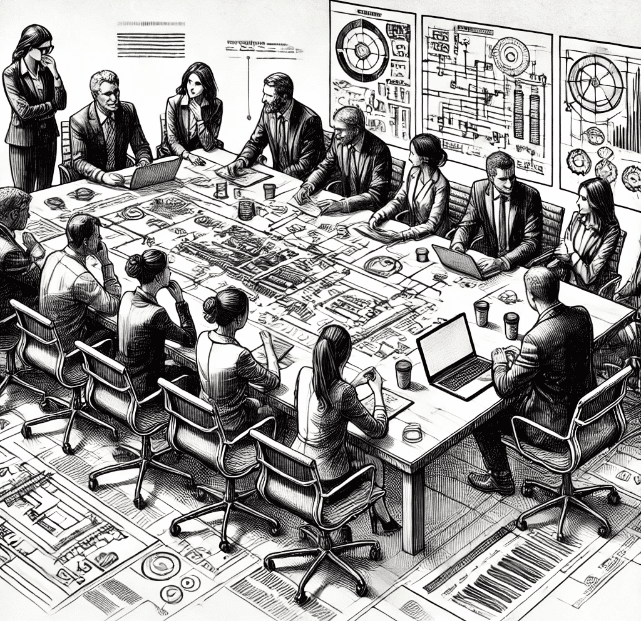

Business Continuity and Disaster Recovery: Protecting Your Business from the Unexpected
CinchOps offers tailored BCDR solutions to help businesses prepare for and recover from unexpected disruptions
Business continuity keeps you serving customers during a crisis; disaster recovery gets your systems back after one. Here is how the two differ - and why you need both.
Business Continuity and Disaster Recovery (BCDR) is a single strategy with two jobs: keep the business running during a crisis, and get IT systems and data back online quickly afterward.
People often use the terms interchangeably, but they answer different questions. Business continuity asks, "How do we keep serving customers even if our main office is underwater?" Disaster recovery asks, "How fast can we get our systems and data back?" You cannot control whether a hurricane hits or a cybercriminal targets you - but you can control how prepared you are when it happens.
Business Continuity vs Disaster Recovery
Same goal - resilience - approached from two different angles.
Business continuity is broad and operational (keep the business functioning); disaster recovery is focused and technical (restore IT and data). One covers the whole organization; the other covers the systems that organization runs on.
| Dimension | Business Continuity (BC) | Disaster Recovery (DR) |
|---|---|---|
| Core question | How do we keep operating during a crisis? | How fast can we restore IT systems and data? |
| Scope | The whole business - people, processes, facilities | Technology - servers, applications, data |
| Focus | Keeping critical functions running | Recovering systems after a disruption |
| When it acts | During the disruption | After the disruption |
| Example | Staff work remotely while the office is closed | Data and applications restored from cloud backups |
| Success measure | Customers keep getting served | Downtime measured in hours, not weeks |
Neither half is complete on its own. A disaster recovery plan that restores your servers is little help if your staff has no way to keep serving customers while that happens - and a continuity plan that keeps people working is undermined if the data they need is gone for good. BCDR ties them together.
What You Are Preparing For
The threats vary; the need to be ready does not.
BCDR exists because disruption is a matter of when, not if - and the causes range from weather to cybercrime to a single mistaken click.
The threats a plan has to account for are wide-ranging:
- Natural disasters - hurricanes, floods, or storms that close a facility.
- Cyberattacks - ransomware or data breaches that lock or steal your data.
- Power outages and equipment failures that take systems offline.
- Public health emergencies that keep staff out of the building.
- Human error - the accidental deletion or misconfiguration that no firewall stops.
Without a plan, any one of these can mean lost revenue, a damaged reputation, compliance problems, or the permanent loss of critical data.
Why BCDR Matters
You cannot predict the threat - but you can control the outcome.
A BCDR plan turns unpredictable events into manageable ones, and the payoff shows up in downtime, data, trust, and competitive position.
- Minimized downtime. Every minute offline costs money; BCDR gets you running again faster.
- Data protection. Your data is the business - BCDR keeps it safe and recoverable.
- Customer trust. Staying resilient through a crisis builds confidence rather than eroding it.
- Competitive edge. When disruption hits unprepared competitors, you are the one still serving customers.
- Peace of mind. Knowing you are prepared lets you focus on growing the business instead of the "what ifs."
You cannot stop the hurricane or the ransomware. What you can decide, in advance, is whether that event takes you offline for an afternoon or for a month. That decision is made long before the disruption - it is made when you build the plan.
Resilience, Sized to Your Business
CinchOps builds BCDR plans matched to each client's risks and budget - from cloud backups to tested recovery - as part of everyday managed IT and dedicated continuity and recovery services.
Explore CinchOps BCDR →How CinchOps Helps with BCDR
CinchOps is a Katy, Texas managed IT services provider serving businesses across the Houston metro, building continuity and recovery plans matched to each organization's needs.
- Tailored risk assessment. Identifying the specific threats your business faces, so you know what you are preparing for.
- Custom BCDR strategy. A plan that fits your business, budget, and risk tolerance - not a one-size template.
- Modern recovery technology. Cloud backups and virtualization that keep you running and restore you fast.
- Regular testing and training. Making sure your team knows exactly what to do when a crisis actually hits.
You cannot predict every threat, but with the right preparation you can face them with confidence. Contact CinchOps to build a resilience plan that keeps you in control.
Frequently Asked Questions
What is the difference between business continuity and disaster recovery?
Business continuity keeps your critical business functions running during a disruption - covering people, processes, and facilities. Disaster recovery is the IT-focused part: restoring systems and data quickly after a disruption. BC keeps the business operating; DR gets the technology back. A complete plan needs both.
What does BCDR stand for?
BCDR stands for Business Continuity and Disaster Recovery. It is a combined strategy that pairs continuity planning (keeping operations running during a crisis) with disaster recovery (restoring IT systems and data afterward) into one framework for organizational resilience.
Do small businesses need a BCDR plan?
Yes. Small businesses are often less able to absorb extended downtime or permanent data loss than large ones, so preparation matters even more. A BCDR plan can be sized to a small business's budget and risk - it does not require enterprise resources to be effective.
What threats does a BCDR plan protect against?
A BCDR plan prepares you for natural disasters, cyberattacks like ransomware and data breaches, power outages and equipment failures, public health emergencies, and human error. You cannot control whether these happen, but a plan controls how much they disrupt your business.
How is a BCDR plan kept effective over time?
Through regular testing and training. A plan that sits in a drawer fails when it is needed; practicing recovery procedures and updating them as the business changes ensures your team knows what to do and the plan still fits. Cloud backups should also be tested by actually restoring from them.
Discover More
Sources


